Technique
Wet-on-wet watercolor: the same bridge painted two ways
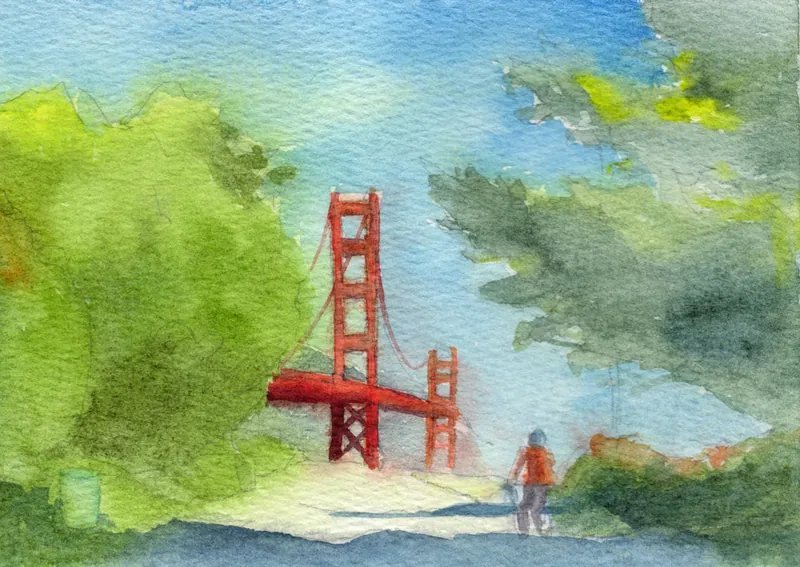
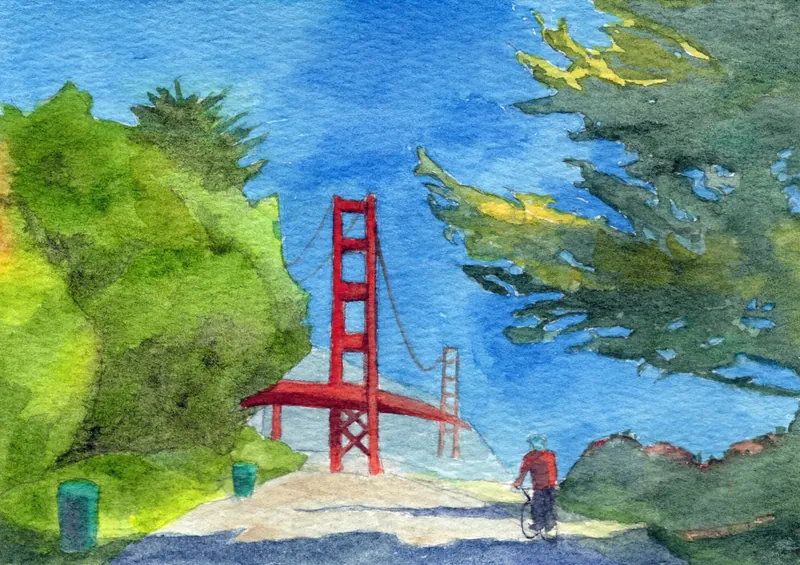
I painted the same view of the Golden Gate Bridge twice. The first one is mostly wet-on-wet. The second is painted with drier brushwork, one area at a time. Putting them side by side is the clearest way I know to show what wet-on-wet does.
What wet-on-wet means
Wet-on-wet means putting paint onto paper that is already wet, either with clean water or with a wash that has not dried yet. The paint spreads on its own and the edges blur. On dry paper the paint stays where the brush puts it and leaves a hard edge.
What changes between the two paintings
- The sky. In the first painting the sky is wet-on-wet, so the blue fades to almost white around the bridge. In the second, the blue is darker and more even.
- The trees. In the first, the greens run into the sky and into each other. In the second, the cypress branches are painted on dry paper with gaps of blue left between them, so each branch has a clear shape.
- The far tower. In the first it is pale and soft, almost lost. In the second it is a clear red line.
- Detail. The second painting has more small things in it, like the two trash cans and the cyclist's wheel. Drier paper makes small details easier to place.
The first one looks more like a day with fog or haze in the air. The second looks like a clear, sunny afternoon.
How I paint wet-on-wet
- Wet the area with clean water. For a sky, wet all of it, a little past where the trees will be.
- Wait for the shine to soften. Very wet paper makes the paint run too far. Slightly less wet gives more control.
- Drop in color with a loaded brush. Use more pigment than looks right. It gets lighter as it spreads and dries.
- Tilt the board, then leave it alone. Going back into it while it is half dry causes blooms.
- Keep one hard edge. In both versions the bridge is the sharpest thing in the picture. One sharp shape gives the eye somewhere to land in all that softness.
When to use which
Wet-on-wet suits anything that should look soft or far away: fog, skies, distant hills, the edges of trees. Drier brushwork suits things that should look solid and close: buildings, branches, people, small details. Most of my paintings use both, wet first for the big soft areas and dry later for the parts I want to stand out.
Common questions
What is wet-on-wet watercolor?
Painting onto paper that is already wet, with clean water or an unfinished wash. The paint spreads on its own and the edges blur.
What is the difference between wet-on-wet and wet-on-dry?
Wet-on-wet gives soft, blended edges. Wet-on-dry, painting on dry paper, gives hard edges and more control over where the paint goes.
How do you paint fog or haze in watercolor?
Use wet-on-wet for the sky and the distant parts so their edges blur, keep them pale, and paint one sharp shape in the foreground.
Why does my wet-on-wet painting get blooms?
Usually from adding more water or paint while the area is half dry. Either work while it is still evenly damp or wait until it is completely dry.